As the Cold Deepens
A month has passed since the new year began, yet the cold days continue. Around this time of year, many people are reaching the final stages of entrance examinations or job-hunting, and I imagine there are quite a few who are in the middle of their last big push. Some may feel anxious because they can’t see what lies ahead. I would be happy if this article could be of some help.
Go-en (Karmic Connection)
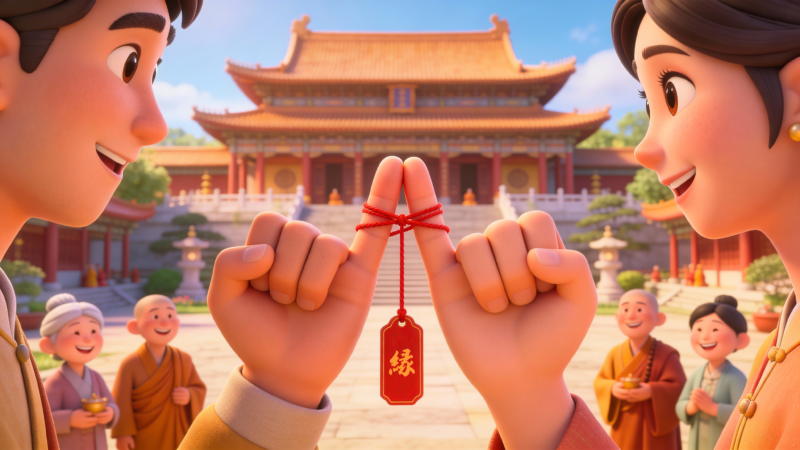
In Japan, a word that frequently appears at major turning points in life is “go-en.” When someone gets married, people say, “You must have had a good karmic connection (go-en).” In rejection emails during job-hunting, one often reads phrases such as, “This time, it seems we did not have a karmic connection (go-en) with you.” In this way, we encounter the word “go-en” quite often. If you look up “go-en” in a dictionary, it is explained in a Buddhist sense as “conditions or circumstances that support a cause and bring about a result.” My understanding is that “the result we see before us now has arisen from the overlapping of many different factors (causes) up to this moment.”
Unacceptable Go-en
Then, when we fail to get into our desired school or do not receive an offer from the company we hoped for, can we honestly accept it when someone says, “That, too, is go-en”? An enlightened Buddha might be able to accept it, but in reality—especially when one is right in the middle of the situation—I do not think it is something we can easily accept. Regardless of the outcome, the process of making blood-sweating efforts to achieve a goal is an undeniable fact. If someone casually dismisses it with “That’s just your go-en,” I would feel unbearably frustrated.
What Should We Do?
Go-en, as mentioned earlier, is the result of various causes. I would like you to think about these various causes.
To begin with, our goals themselves are intertwined with our many experiences. Among those experiences, some may have been forced upon us by others, but there are also many that we chose ourselves. For example, someone likes good food and cooks for themselves. They serve meals to friends and are happy when those friends enjoy them. As they continue cooking, they may eventually become a professional chef.
The actions that create these causes (in this case, cooking for oneself) are based on our own wiill. Realizing we can create causes through our own will makes us feel a little easier.
Next, how should we look objectively at the result that is happening right before us now?
A rainy day feels gloomy to people living in modern times, but for farmers in the Edo period (1603-1867), They were a blessing from heaven. There are many ways to perceive things, and it is we ourselves who decide what is good or bad. In the result itself, there is neither good nor evil. There is simply the natural phenomenon of rain falling.
Perhaps the actions (causes) we take now may give rise to future go-en (results).
Instead of giving up by saying, “It can’t be helped because it’s go-en,” I think it’s better to accept the result before us and do what we can now, moving toward future go-en.



No comments yet.